




RELATED: Special Meeting: Walton Hills Traffic Camera Collections and 2025 Budget
WALTON HILLS, Ohio – Walton Hills Village Council’s regular meeting on Tuesday, Nov. 18 focused on fine‑tuning the Walton Hills traffic camera ordinance, reviewing the village’s early 2026 budget projections, and discussing capital projects and reimbursements. Council members also took time to publicly praise the service department for keeping up with this fall’s leaf collection.
First Reading: Speed Camera Ordinance 2025‑15
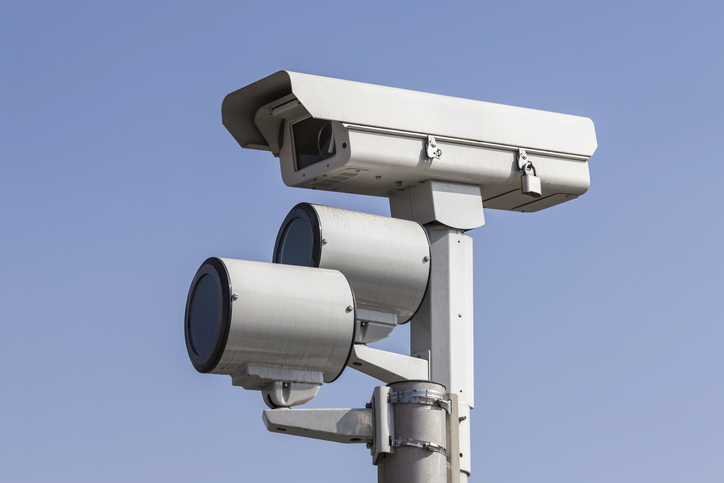
Council placed Ordinance 2025‑15, the Walton Hills traffic camera “Speed Camera Amendment,” on first reading. The measure would amend Ordinance 2024‑18 and Section 414.035 of the codified ordinances, which governs traffic law photo‑monitoring devices in the village.












Law Director John Montello told council he wants more time to coordinate with:
- The Garfield Heights Municipal Court judge,
- The camera vendor, and
- The collection company currently handling unpaid traffic citations.
Montello explained that he had reviewed Newburgh Heights’ approach and had considered allowing a civil penalty plus court costs and fees on camera tickets. However, the judge advised that some combinations of civil penalties and court costs may not be permitted as written.
To address that:
- The ordinance clarifies the default and collection section, stating that if the court issues a judgment for a civil penalty under the chapter and it’s not paid, Walton Hills may seek payment “in any manner authorized by law,” including interest and costs.
- The draft also allows a person liable for the penalty to be assessed costs the village incurs in collecting the debt, including collection fees—though the exact percentage is now tied to what’s legally permitted.
Montello said he is inclined to leave references to collection costs in the code for now, even if they cannot all be charged immediately, so that:
“If the law changes or we’re later permitted to collect those costs, it will already be available to us in the ordinance.”
If courts or state law do not allow certain fees, he said the village would instruct any collection agency not to charge them.
The ordinance will come back at a future meeting once Montello and the judge have completed their discussions.
Mayor’s Court: October Traffic and Revenue Snapshot
Mayor Don Kolograf reported on Mayor’s Court activity and revenue for October:
- 93 total cases in October,
- 32 citations written for traffic offenses,
- Additional citations for other driving‑related violations, including at least one arrest for operating a vehicle while under the influence of alcohol,
- Mayor’s Court revenue for October: $20,227,
- Year‑to‑date revenue: $182,683.95,
- Year‑to‑date revenue last year was lower, suggesting the court is tracking ahead of 2024.
These figures are central to the broader Walton Hills traffic camera and enforcement conversation, since camera citations often move through the same financial and collection system as other court cases.
2026 Budget: Projected Deficits and Fund Balance Pressures
Fiscal Officer Nickol Sell walked council through updated budget projections for 2026, including a draft showing a significant operating deficit before major capital items are even counted.
Key points:
- The actual general fund balance as of mid‑fall was about $1.8 million,
- The projected beginning balance shown in the far‑right budget column—about $953,921—is a projection, not a current cash figure,
- The base deficit in the draft budget is roughly $634,000,
- Large capital items commonly grouped as “Ryan and Kaylee” (police and service vehicles) total about $450,000.
Councilman Brian Spitznagel summarized the concern:
- Combined, the deficit plus those two big capital pieces push total pressure close to $1.1 million,
- Even with today’s $1.8 million general fund balance, absorbing that much in one year could leave the ending balance in the $700,000–800,000 range, before other projects are added.
Sell told council the village:
- Did meet its 2025 municipal income tax budget,
- Benefited from a somewhat unusual filing pattern this fall, where several taxpayers filed late returns or payments,
- Still needs to be conservative about adding new spending until final RITA numbers are in.
Spitznagel stressed that council needs to prioritize:
“We have to be honest about what we can afford, especially with how quickly that general fund balance could shrink once we add in major vehicles and infrastructure.”
Capital Projects and Reimbursements: Roads and Parks
Council also reviewed where things stand with road and park projects:
- Two late‑fall projects—one involving Alexander Road and another involving Meadow Park/South Meadow—are being paid up front by the village,
- Sell said reimbursements for:
- Meadow Park are expected to show up in 2025 or 2026,
- Alexander Road could be reimbursed late this year or in 2026, depending on when the project is fully closed out.
- Walton Hills is still owed about $92,699 in submitted but not yet received reimbursements on various projects.
Council noted that these timing gaps complicate the budget: expenses hit now, while grant revenue lands later.
Mayor’s Court vs. Camera Fines: Ability to Pay and Collections
A council member raised a policy question linking Mayor’s Court and the Walton Hills traffic camera ordinance:
- When someone cannot pay or does not pay, what does the village do in Mayor’s Court, and how does that compare to camera citations that go to collections?
Law Director John Montello and Mayor Kolograf outlined the current practice:
- Because of Ohio Supreme Court decisions, the village is limited in how it can punish people who simply don’t pay fines:
- In many cases, the village can only place a registration block affecting license plates,
- Full license suspensions or aggressive warrant use purely for non‑payment are heavily restricted.
- Mayor’s Court does allow:
- Payment plans,
- Extended time to pay,
- Opportunities to pay ahead and avoid repeat appearances.
- Camera cases may flow through a different collection stream, particularly if a separate agency is used; the village is still weighing whether to have one collector or two—one for court, one for cameras.
Montello acknowledged that some third‑party collection efforts recover only about 25% of outstanding obligations, reinforcing the need to be realistic about how much unpaid Walton Hills traffic camera debt the village can ever collect.
Upcoming Budget and TIF/Police/Fire Work
Looking ahead, Sell told council:
- She will be presenting budgets for the TIF, police, and fire funds,
- Major capital decisions—such as additional cruisers, trucks and equipment—will be kept separate so council can first see the operating picture,
- A special meeting will be scheduled for a deeper dive into 2026 appropriations.
Mayor Kolograf also noted that the economic development consultant will return at a later session to provide a full update on the Ford Road industrial redevelopment and related TIF revenues.
Village Thanks Service Department for Leaf Pickup
In a lighter moment, council members praised the Walton Hills service department for keeping up with fall leaf collection:
- Leaves stayed on trees until late in the season,
- Heavy rains then brought them down almost all at once, leaving nearly every yard piled with leaves,
- Council members said crews have done an “excellent job” staying ahead of pickup, even with early snow and heavy workloads.
One member joked that there is still “one big tree” behind the village building that seems determined to hold onto its last leaves, drawing some laughter.
Mayor Kolograf closed the meeting by wishing residents and staff a happy Thanksgiving and reminding everyone that this meeting, though longer than usual, laid important groundwork for the coming year.