


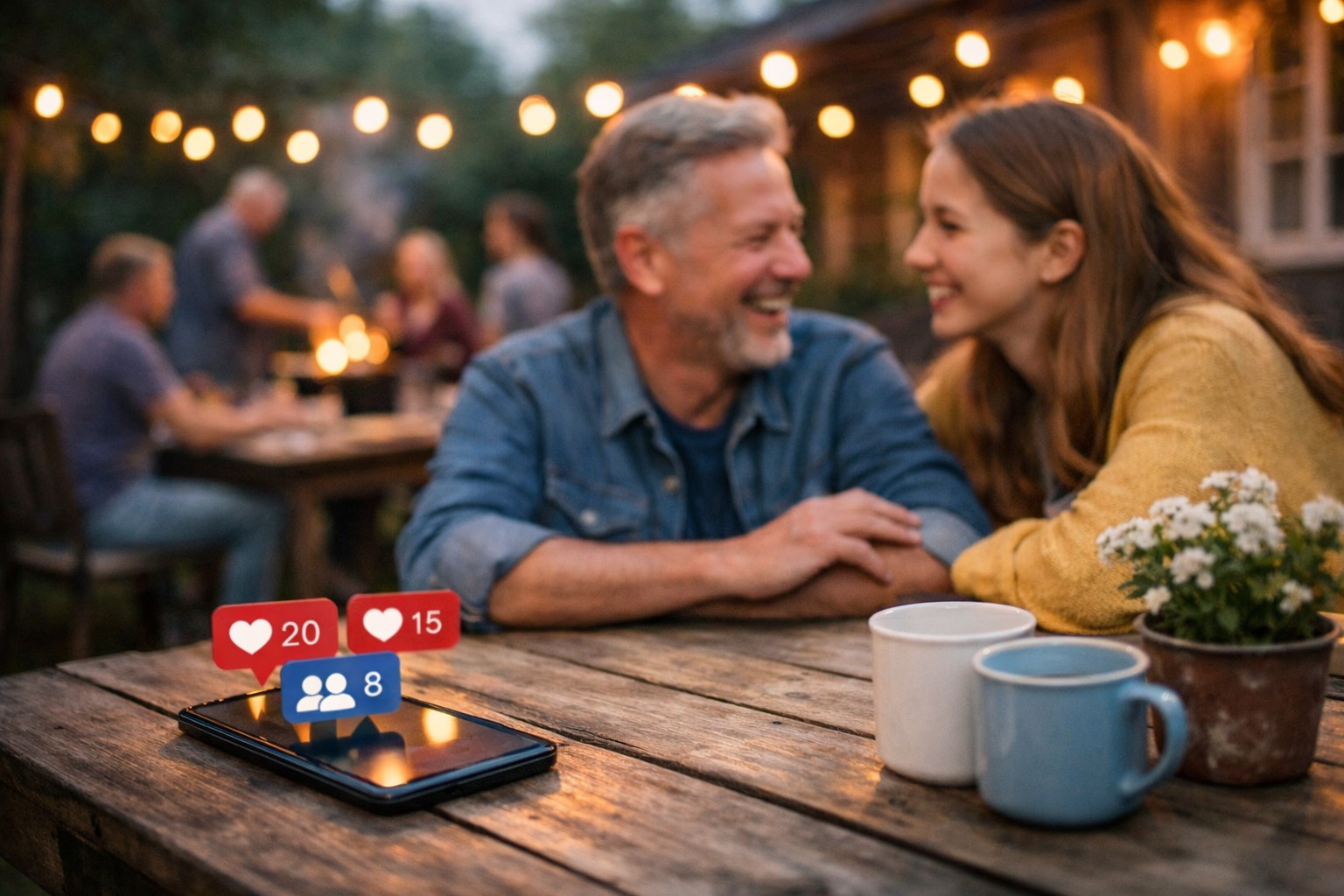

It started with a small, sweet moment. My daughter looked at me and said, “Dad, you should probably have more friends. And I don’t mean just on social media.” There was no judgment—just gentle concern, like reminding someone to water a plant. I laughed, but the thought stuck. She wasn’t rejecting technology; she was reminding me that connection works best when it has a pulse. That tiny conversation planted the seed for this article.
For years, we’ve heard that society is drifting into a lonely, isolated future—one where people stare into screens instead of each other’s eyes, where “friends” are just profile pictures, and where physical communities fade into memories of a world we once valued. This argument is dramatic, compelling, and understandable. But it is also incomplete. While it’s true that digital spaces can encourage shallow interaction, it is equally true that social media, when paired with real-world involvement, can strengthen human connections rather than replace them.
Why technology is not the enemy













The problem is not the technology itself; it’s how it is used. And the solution is simpler than people think: use social media to support friendships, and use local communities to build them. When these two forms of connection work together, they create a modern foundation for friendship that is richer than either one alone.
Making social media a bridge, not a barrier
Social media provides something people have always needed: points of contact. In the past, neighbors waved from porches, coworkers chatted around water coolers, and community centers buzzed with activity. Today, many of those natural gathering spaces have shrunk. Work is remote, families are scattered, and neighborhoods are quieter. Social media helps fill those gaps by keeping us aware of the people who matter. It lets us check in, offer encouragement, celebrate milestones, and stay connected despite distance or busy schedules.
But social media should not be the final destination—it should be the bridge. A message online can open the door to coffee. A shared post can remind two old friends to plan dinner. A local group page can lead someone to a charity drive, hobby meetup, or neighborhood event. Used this way, social media becomes a spark, not the entire fire.
Why real-world connection matters
That’s where real-world community involvement becomes essential. Human beings are built for face-to-face interaction. We need physical presence—the warmth of a voice, the nuance of expression, the feeling of belonging. Local communities—clubs, volunteer groups, sports teams, faith organizations, neighborhood associations—offer something no screen can: shared experience. Working together, laughing together, and solving problems side by side forges bonds that digital communication alone cannot.
How combining the digital and physical worlds works
Blending the two worlds eliminates the weaknesses of each. Social media alone can feel superficial. In-person interaction alone can be limited or inconvenient. Together, they create continuity. You meet someone locally and stay in touch online. You reconnect online and deepen the bond in person. Connection becomes a reinforcing loop rather than a fragile thread.
This is why the claim that we are headed toward a society devoid of real interaction is misleading. People are not losing interest in one another—they are adapting. When online communication supports real-world presence, friendships often last longer, grow deeper, and become more resilient.
A balanced approach to modern friendship
Rather than fearing the digital age, we should shape it. Social media should be an invitation to friendship, not a substitute for it. And local communities are not relics—they are where connection comes alive.
The future of friendship is not digital or physical. It is both. And when we strike that balance, we don’t lose human connection—we rediscover it.