



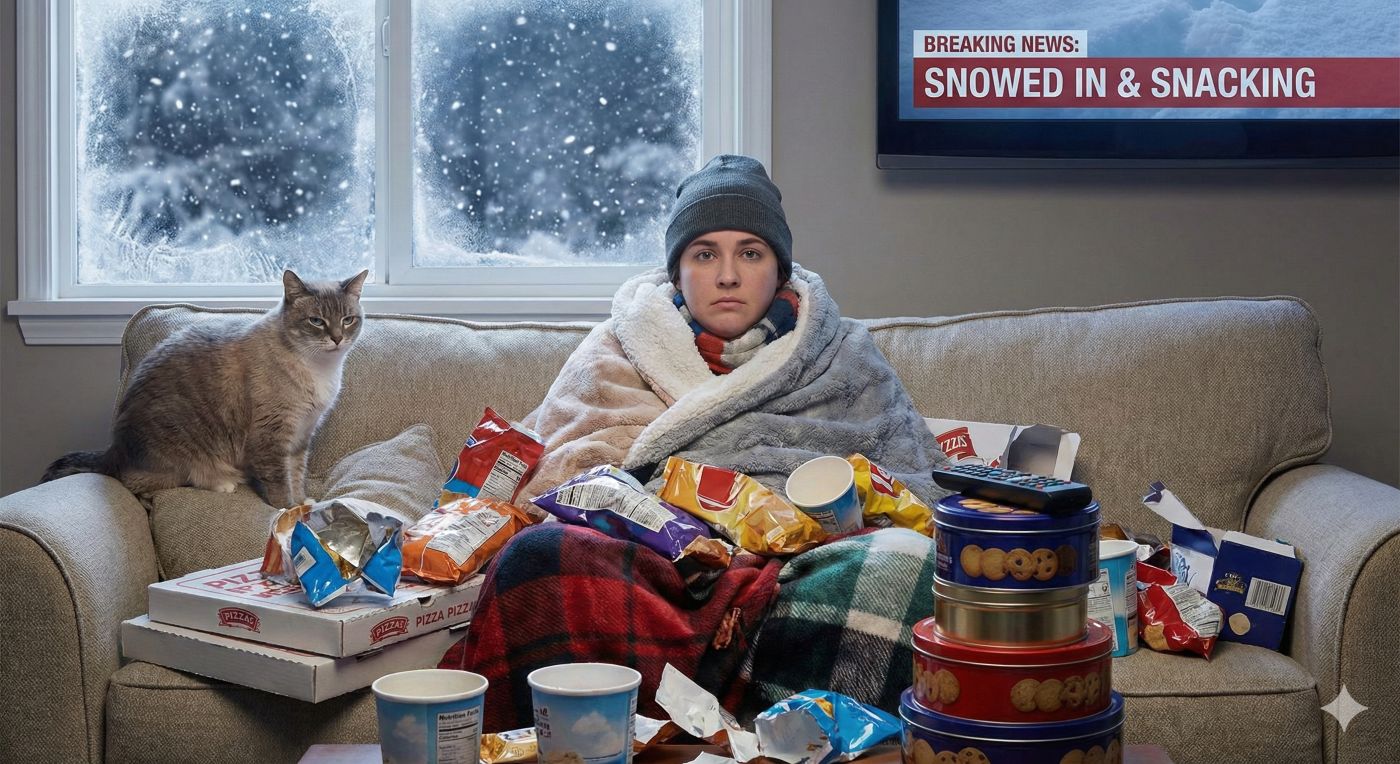

NORTHEAST OHIO – As snow blankets the region and residents hunker down at home, research shows we’re likely eating more than we realize during these cold, wintry days.
Studies confirm what many of us intuitively know: when temperatures drop and snow piles up outside, our appetites increase significantly. The average person gains 1 to 2 pounds during winter months, according to research cited by health experts, and those extra pounds can add up over a lifetime.
Why Cold Weather Triggers Hunger
The reasons behind winter eating habits are both biological and psychological. When outdoor temperatures plummet, our bodies crave high-calorie, high-carbohydrate foods—stews, mashed potatoes, mac and cheese—foods that provide warmth and comfort.













“Simply put, when outdoor temperatures drop, your body temperature drops, and that’s what sets up the longing for foods that will warm you quickly,” nutrition experts explain. Our bodies enter a self-preservation mode, sending signals to consume foods that provide instant heat.
But it’s not just about staying warm. Research from NPR suggests some of our winter eating habits are vestiges of biology—chipmunk-like behavior nudging us to eat more in preparation for scarcity. Others point to cultural factors: the abundance of seasonal treats, plus the association of winter with heavier, richer meals.
Darkness and Isolation Compound the Problem
Shorter days and longer nights also play a significant role. When it gets dark early, people stay indoors more, leading to increased isolation and hunger. WebMD research shows that up to 6% of the population suffers from Seasonal Affective Disorder (SAD), a type of depression caused by lack of light exposure. Those affected often crave carbohydrates because they temporarily boost serotonin levels.
Even without full-blown SAD, shorter days and colder weather reduce outdoor physical activity—a double whammy for weight gain. Exercise helps increase serotonin and suppress appetite, so less activity means more eating.
Breaking the Winter Eating Cycle
Experts recommend several strategies to manage winter appetites:
- Eat healthy snacks between meals—high-protein, high-fiber options like peanut butter on whole wheat crackers help fuel your body’s heat mechanism
- Stay active indoors with winter activities like indoor exercise, games, or hobbies
- Create lower-calorie comfort foods like vegetable soup, whole wheat pizza with veggies, or hot cocoa with non-fat milk
- Get daily light exposure by spending time outdoors or considering light therapy
- Keep treats out of sight to reduce temptation
As Northeast Ohio residents settle in for another snowy day at home, being aware of these eating patterns can help prevent the gradual weight gain that accumulates over 30 winters.