




Information about starting a business in Akron, Ohio.
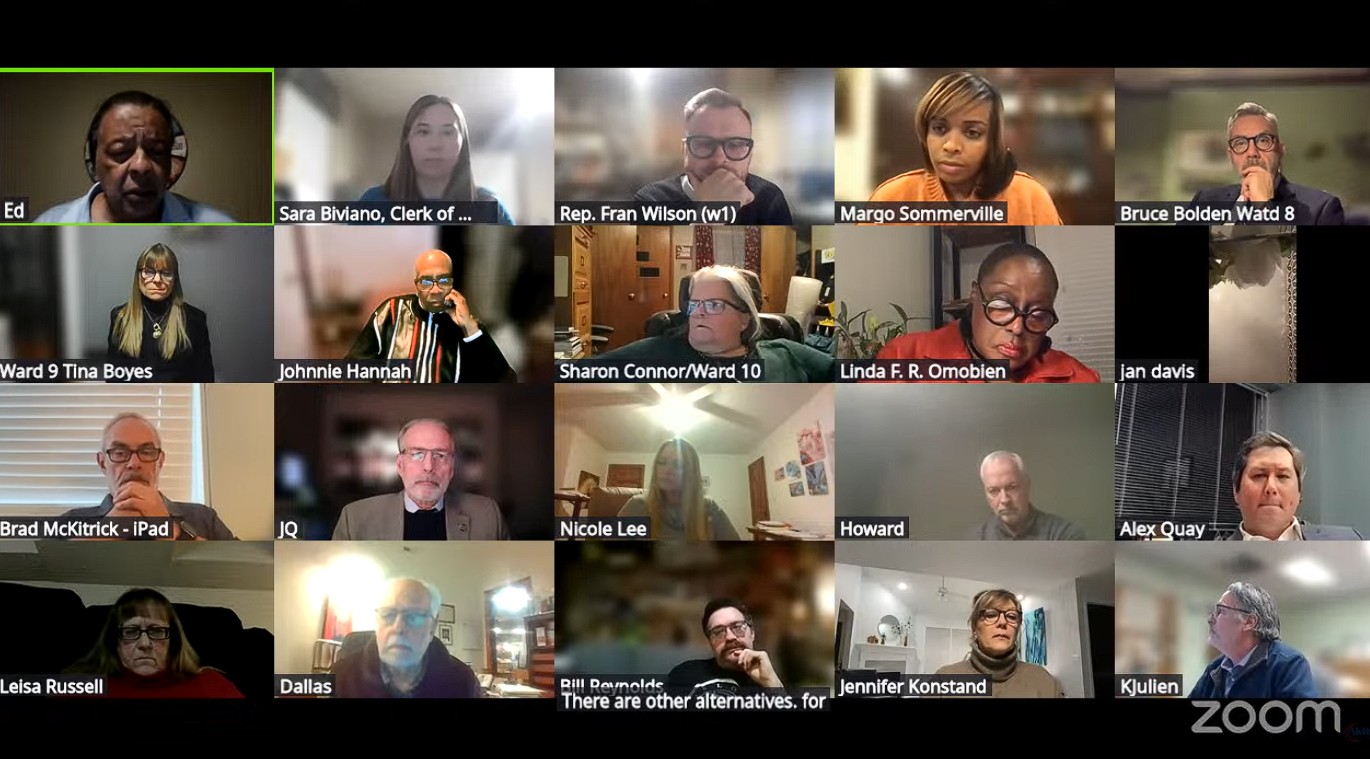
AKRON, Ohio – The Akron City Council Planning and Economic Development Committee convened Monday for a marathon session that exposed deep divisions over development priorities, public safety spending, and neighborhood concerns. The meeting showcased competing visions for the city’s future as council members navigated a contentious conditional use hearing for a marijuana dispensary, fielded sharp criticism of the 2026 capital budget, and honored the retirement of a 32-year city veteran.
The Marijuana Dispensary Battle at 1140 West Portage Trail
The most contentious item on the agenda centered on a conditional use request from OPC Cultivation LLC (operating as Firelands Scientific and The Landing Dispensary) to open a dual-use marijuana dispensary at 1140 West Portage Trail, the site of a former CVS pharmacy. The proposal calls for 3,000 square feet dedicated to retail cannabis sales and 7,700 square feet reserved for future neighborhood-oriented retail tenants. The site would include 59 parking spaces and enhanced security measures.












The Applicant’s Case
Jesse Gannon, representing OPC Cultivation, presented a compliance-focused pitch. He emphasized that the company operates in full accordance with municipal and state law, and highlighted that over 75 percent of voters in the ward supported Issue 2, the statewide marijuana legalization measure. Gannon stressed OPC’s track record of community involvement and responsible operations at other locations.
William Reynolds, a community member, also testified in support, arguing that a regulated dispensary would bring jobs and tax revenue to the neighborhood while maintaining accountability. He countered opposition claims by noting that regulated dispensaries do not increase violent crime rates.
The Opposition Mobilizes
Residents from multiple nearby developments—Waters Edge Condominiums, Waterford, Cascade Falls, The Ridge, and Sycamore Townhouses—packed the hearing to voice concerns. Their testimony revealed a neighborhood deeply worried about traffic safety, proximity to children, and property values.
Traffic and Safety Concerns: Nick Paris, Penny Miller, Jennifer Coston, Charles Santa Maria, and Carl Buck all raised alarms about the already congested and dangerous intersection at West Portage Trail. Residents documented a pattern of accidents and near-misses at the location and warned that a high-traffic retail use would exacerbate the problem. Several speakers proposed installing a traffic control device to manage flow.
Proximity to Residential Areas and Schools: Multiple residents emphasized that the dispensary would sit in close proximity to dense residential developments and school bus routes. They expressed fears that the location would normalize drug use among children and create safety hazards for families. Speakers from Waters Edge Condominiums were particularly vocal about customers using their private roads as cut-throughs, leading to wear-and-tear on infrastructure and safety concerns for residents.
Legal and Master Plan Arguments: Attorney Alex Quay, representing Crossings Development and property owner Nicole Lee, mounted a formal legal challenge. He argued that the proposed location violates Akron Code §153.476, which prohibits dispensaries within a one-mile radius of cultivation facilities. Quay identified two such facilities nearby and contended the application should be denied on this basis alone.
Beyond the legal argument, Quay and other speakers—including Nicole Lee, Ed Sturkey, and Carl Buck—invoked the Merriman Valley Master Plan, which envisions the area as a family-friendly, walkable gateway to the Cuyahoga Valley National Park. They argued the dispensary contradicts this vision and urged council to “tap the brakes” and conduct further study before approving any such use in the area.
Council’s Response and Referral
Council member Kyle Julien clarified an important point: the one-mile rule in city code was intended to prevent retail-to-retail clustering of dispensaries, not to prohibit retail dispensaries near cultivation facilities. This distinction suggested the legal argument might not be dispositive.
Nevertheless, the committee proposed several conditions if the project were to move forward, including exploring ways to block dispensary customer access to the Waters Edge Condominiums private roads and ensuring that future retail tenants in the building would be “neighborhood-oriented” and not alcohol-based establishments.
Council member Linda Omobien expressed opposition to the specific location, citing the existing congestion problem. Given the volume and intensity of public testimony, the committee referred the item for further study rather than voting immediately.
The 2026 Capital Budget Under Fire
The Planning and Economic Development Committee also reviewed the 2026 Capital Investment and Community Development Program, a roughly $342 million budget covering infrastructure, equipment, and community development projects across the city.
Helen Tomic presented the capital program, with Tina Boyce confirming there had been no changes since the January 5th presentation to council.
Public Comments on Police Spending
The public comment period revealed significant community concern about specific police equipment purchases. David Guran raised questions about a “CAD system” for police and fire and criticized a $650,000 “command vehicle” as an unnecessary expense. He also requested that future public hearings be held in person rather than on Zoom, citing accessibility issues.
William Reynolds testified against funding AR-style rifles for police, linking the weapons to the death of Jasmir Tucker and advocating for council to vote down the budget as a statement in favor of “pro-life, pro-accountability, and pro-community safety.” Reynolds also supported the request for in-person hearings.
Charter Requirements and Timeline
The Chair noted that charter notification requirements must be met for any public hearing and that the capital budget must be enacted by February 15th, creating a tight timeline for further deliberation and public input.
Michael Antenucci’s Retirement Celebrated
In a moment of unity and reflection, the council passed a resolution congratulating Michael Antenucci on his retirement after more than 32 years of service to the City of Akron. Antenucci’s career spanned multiple departments and roles, making him a cornerstone of the city’s technical and engineering operations.
Council members offered effusive praise. They highlighted his “encyclopedic knowledge” of Akron’s infrastructure, his tireless work on the city’s water and sewer systems, and his legendary responsiveness to council inquiries. Members noted that his patience, expertise, and institutional memory had been invaluable to the city’s operations. His departure marks the end of an era for Akron’s technical leadership and raises questions about succession planning for critical city functions.
Other Business
The committee also addressed several other items:
- A conditional use request for a dual-use marijuana dispensary at 1960 West Market Street was reported out favorably, despite opposition from Bruce Balden based on resident concerns.
- The Archwood Redevelopment Plan substitute legislation, which clarified Section D, was passed after Pastor Tibbs and community members expressed satisfaction with the edits.
- A contract with Krazy Homes Incorporated for public utility infrastructure at the Harris School site was placed on the consent agenda.
- The acquisition and redevelopment of a multi-family apartment building on Z Drive by Jeter Capital LLC (using a city bridge loan for affordable housing) was referred for further study.
- The Bloomberg Philanthropies Youth Climate Action Fund Grant application was approved for timely submission.
- Maintenance services at Lock 3 with Vizmeg Landscaping were placed on the consent agenda.
- Road improvements along Vernon Odom Boulevard, led by ODOT with Akron funding ADA ramps, had rules suspended to allow timely project start.