




By Nino Seritti
Before Seven Hills had subdivisions, school buses, or city hall, it was quiet farmland. Rolling fields, tree lines, and dirt roads once defined the land just south of Cleveland, shared historically with what would become Parma. This area wasn’t isolated—it was connected from the beginning to the pull of the central city. Cleveland’s factories, rail lines, and growing workforce shaped what Seven Hills would eventually become: a small suburb built to serve big-city lives.
Phase One: Rural Roots (Before the 1950s)










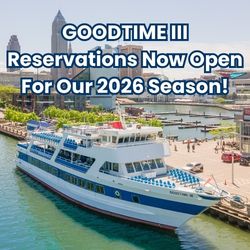


For much of its early history, Seven Hills existed as part of Parma Township, a largely agricultural area supplying food and space to the growing city of Cleveland. Farms, orchards, and open land dominated the landscape. Families worked the land, traveled by wagon or simple roads, and relied on nearby towns—including Cleveland—for trade, church, and specialized services.
Among these early pioneers were the Froehlich family, whose presence in the mid-1800s established the area’s moral and civic foundation. As noted by Cleveland.com, the Froehlichs were devout abolitionists who operated a stop on the Underground Railroad at the Duff house on Broadview Road, using a hidden root cellar to protect those seeking freedom. Their legacy of quiet conviction mirrored the character of the land: purposeful, principled, and deeply connected to the broader American story.
Phase Two: Postwar Pressure and Possibility (Late 1940s–1950s)
After World War II, everything changed. Cleveland was booming with returning veterans, industrial jobs, and a housing shortage. Like much of Northeast Ohio, farmland south of the city suddenly became valuable—not for crops, but for homes. Developers looked to Parma Township, including what is now Seven Hills, as ideal suburban territory: close enough to Cleveland jobs, but far enough to offer space, quiet, and the promise of a new start.
During this transition, trailblazers like Emil Lingler helped bridge the gap between the area’s rural past and its suburban future. Lingler, an early settler, provided one of the most enduring accounts of the city’s naming, attributing it to a local golf course that featured seven distinct hills on its terrain. His perspective represented the shift from pure agriculture to the recreational and residential “lifestyle” that would define the new suburb. In 1956, Seven Hills officially incorporated as a city, choosing independence while remaining deeply connected to Parma and the greater Cleveland area.
Phase Three: Building a Community (1960s–1970s)
With incorporation came intention. Streets were planned, neighborhoods took shape, and schools, churches, and civic spaces followed. Many Seven Hills residents worked in Cleveland’s factories, offices, hospitals, and shops—or in nearby Parma’s growing commercial corridors. Daily life flowed outward in the morning and back inward at night.
As the city matured, it sought a visual identity to match its new status. In 1961, a young trailblazer named Bonnie Mitisek, then a student at Hillside Junior High, designed the city’s official emblem. Her design, featuring Roman numerals and a laurel wreath, connected the small Ohio suburb to the “Seven Hills of Rome,” a symbol of endurance and classical strength that the city still uses today. This era established much of Seven Hills’ character—quiet streets, single-family homes, and an emphasis on stability rather than expansion.
Phase Four: Change Without Reinvention (1980s–2000s)
As Cleveland faced industrial decline and reinvention, Seven Hills felt the ripple effects. Jobs shifted, commuting patterns changed, and retail moved outward. Yet the city avoided dramatic transformation. Instead, it adapted—maintaining infrastructure, supporting schools, and preserving neighborhood identity.
Connections to Cleveland remained strong, especially through healthcare, education, and culture. Residents still looked north for sports, arts, and employment, while relying on Parma for shopping, dining, and shared services. Seven Hills existed comfortably in between.
Phase Five: A Small City With Deep Roots (Today)
Today, Seven Hills stands as a reminder of a specific moment in American history—the postwar suburban experiment shaped by Cleveland’s rise. Its farmland past isn’t visible in fields anymore, but it’s present in the city’s layout, scale, and sense of intention.
Seven Hills was never meant to replace Cleveland, nor compete with Parma. It was built because of them. Its story is inseparable from the central city’s growth, challenges, and resilience. From the abolitionist roots of the Froehlichs to the modern civic pride sparked by residents like Mitisek and Lingler, Seven Hills’ 70-year journey reflects how a small suburb can grow carefully, stay connected, and still feel like home.